Every growing business eventually collides with the limits of spreadsheets and disconnected tools. Orders sit in one system, inventory in another, HR in a third, and finance is stitching it all together at month-end with heroic effort. That's the moment an ERP conversation begins — and increasingly, that conversation ends with a custom ERP built by UDM Techno Solutions rather than a bloated off-the-shelf platform that forces your business to conform to it.
What ERP Really Means Today
Enterprise Resource Planning software is the operational nervous system of a business. It ties together sales, inventory, purchasing, manufacturing, finance, human resources, and customer relationships into a single source of truth. Everyone works from the same numbers, decisions get made faster, and reporting becomes real-time instead of retrospective. That's the promise. The reality with generic ERP is often years of implementation, expensive consultants, and workflows that never quite fit.
Why Off-the-Shelf ERP Frustrates Growing Companies
Products like SAP, Oracle, and NetSuite are extraordinarily capable — but they were built for enterprises with the budget to bend their business around the software. For mid-market and fast-growing companies the cost, the customization overhead, and the sheer number of unused features become a permanent tax. On top of that, licensing costs grow with every user and every module, quietly turning ERP into one of the largest line items on the IT budget.
The Case for Custom ERP
A custom ERP flips the equation. The software matches your workflow instead of forcing you to match it. You pay for engineering once instead of licenses forever. Modules can be added or retired based on real business needs. And because you own the code and the data, you're never held hostage to a vendor roadmap that doesn't align with your priorities. For most businesses between fifty and five thousand employees, a well-built custom ERP is dramatically cheaper over a five-year window.
Modules We Typically Build
Every custom ERP we deliver is different, but the common modules are recognizable across industries: sales and order management, inventory and warehousing, procurement, manufacturing and production planning, finance and accounting, HR and payroll, CRM, and business intelligence. We start with the modules that unlock the biggest immediate value and add the rest in phases so the business feels ROI within months, not years.
Architecture That Ages Well
We architect our ERPs as modular monoliths in the early phases, gradually extracting services as scale demands. The core is usually a well-normalized PostgreSQL schema with a strict audit log, a queue for asynchronous work, and a clean REST or GraphQL API. The front-end is React with role-based dashboards, and mobile access is a first-class citizen. This keeps the platform easy to reason about, easy to hire for, and easy to extend for the next ten years.
Integrations Are Half the Battle
No ERP lives in isolation. We integrate with courier APIs, payment gateways, GST portals, marketplace feeds, banking systems, WhatsApp Business, and dozens of niche vertical tools. Every integration is wrapped with retry logic, idempotency, and monitoring so a downstream outage never corrupts your data. Our clients tell us it's the invisible reliability of these integrations that they notice first once they switch.
Roles, Permissions, and Compliance
ERPs hold your most sensitive data — customer records, financials, employee information — so security is not negotiable. Every module ships with fine-grained role-based access control, full audit trails, encryption at rest and in transit, and configurable data retention. For clients with regulatory obligations we design the platform against SOC 2, ISO 27001, or DPDP requirements from day one.
Business Intelligence Built In
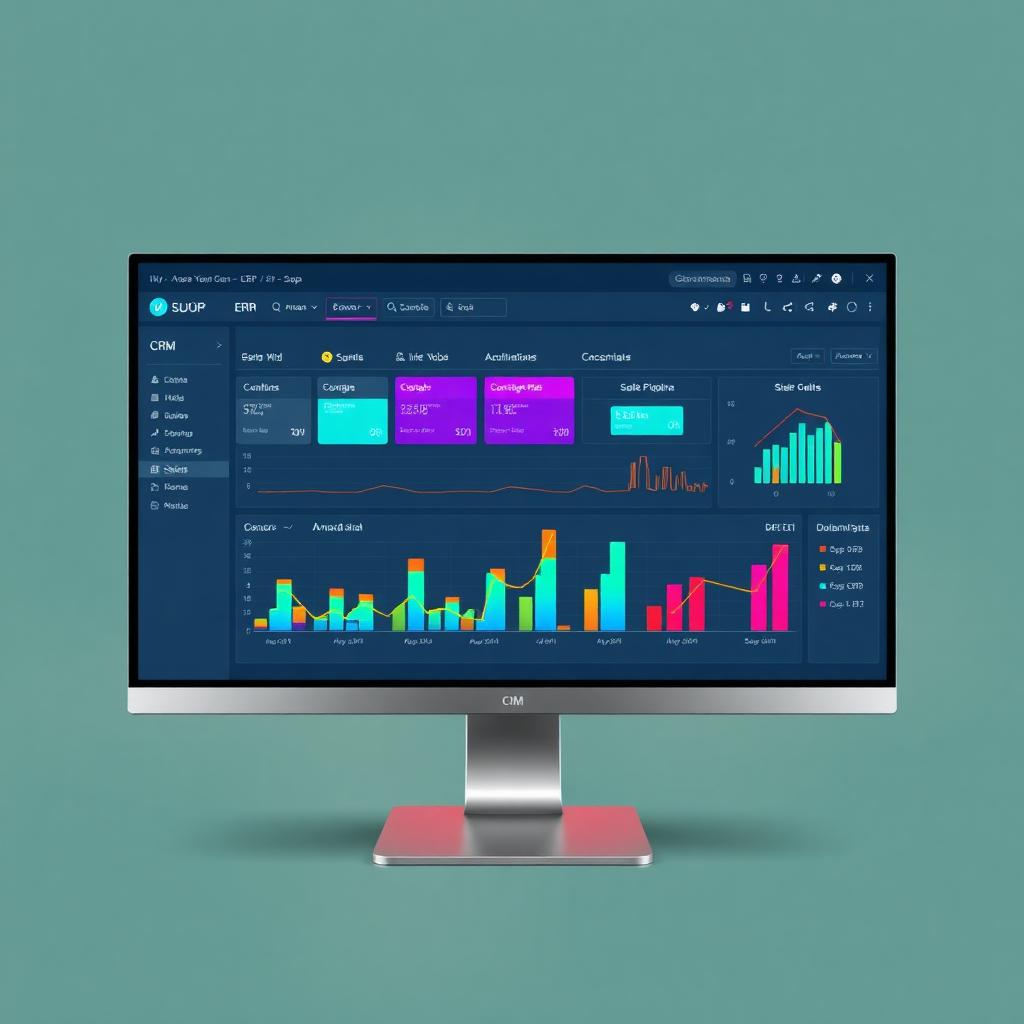
The final layer that transforms an ERP from a system of record into a system of insight is analytics. We embed dashboards for revenue, margins, inventory turnover, aging receivables, employee productivity, and any KPI a leadership team cares about. Executives log in every morning and see the state of the business at a glance. This alone justifies a large portion of the investment for most clients.
Implementation Without the Pain
The biggest reason ERP projects fail is not technology — it is change management. We run implementations in tight, iterative sprints with real users involved from week one. Data migration is dry-run three times before go-live. Training is role-specific and hands-on. And we stay embedded for months after launch to smooth every rough edge. This is why the ERPs we build actually stick.
Is Custom ERP Right for You?
If your business feels like it is being held back by disconnected tools, if reporting takes days instead of minutes, or if you're staring at a seven-figure renewal for software you use twenty percent of — it probably is. UDM Techno Solutions has delivered custom ERPs for manufacturing, retail, healthcare, logistics, and services businesses across India and beyond. We'd love to run a discovery session with your team and show you what a system built exactly for your business could look like.